Complete Guide to the American Kettlebell Swing
The American kettlebell swing is one of the most popular and widely used movements in CrossFit. This exercise is not only part of daily training routines but is also a competition standard in many WODs. Its popularity comes from combining strength, endurance, and cardiovascular efficiency in one simple yet highly effective movement. In this article, we will break down the swing step by step, from basic to advanced levels.
Learn CrossFit movements at Drago Gym CrossFit
What is the American Kettlebell Swing?
In the Russian swing, the kettlebell rises to shoulder height.
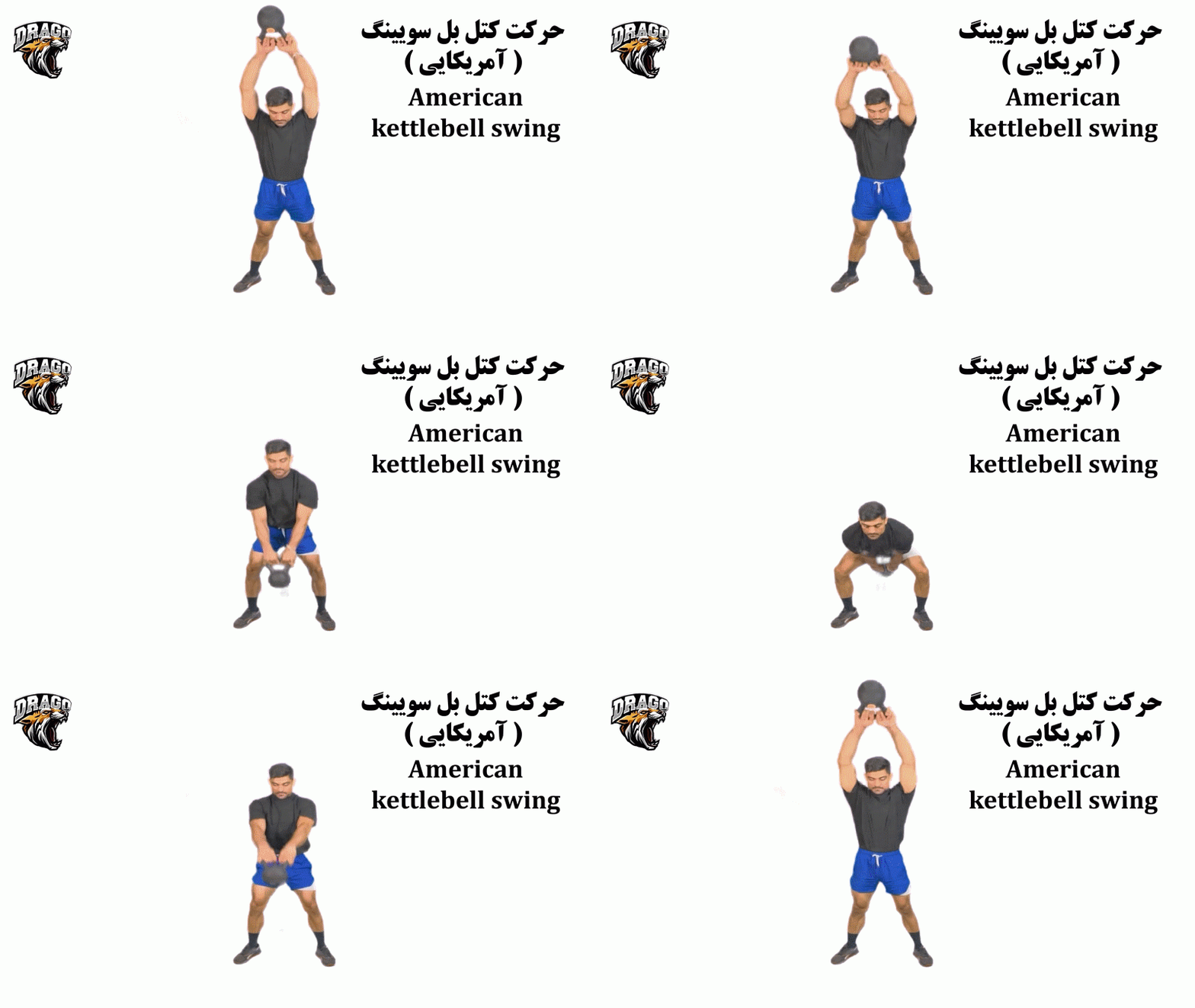
In the American swing, the kettlebell is lifted completely overhead.
This increased range of motion engages more of the shoulders and core muscles, making it a standard exercise in CrossFit.
Muscles Worked
This is considered a full-body exercise:
Lower body: glutes, hamstrings, quadriceps
Core: abdominals, obliques, lower back
Upper body: shoulders, latissimus dorsi, traps
Forearms & grip: holding the kettlebell throughout the movement
Step-by-Step Execution
Set-Up:
Stand with feet slightly wider than shoulder-width, kettlebell placed on the floor just in front of your midline.Grip the kettlebell:
Hold the handle with both hands, keep your back straight, and engage your core.Initial swing:
Swing the kettlebell back between your legs, hips pushed back, knees slightly bent.Hip drive:
Explosively extend through the hips and glutes to generate power. The arms only transfer the force.Overhead position:
Continue the motion until the kettlebell is overhead. At this point:Hips and knees fully extended
Arms locked out overhead
Core tight and ribs closed
Return:
Let the kettlebell descend under control and swing back between your legs.
Key Technique Tips
The primary movement is a hip hinge, not an arm lift.
Avoid excessive arching of the lower back at the top.
Fully lock out hips and knees at the overhead position.
Exhale at the top of the swing.
Benefits
Builds explosive hip power (useful for sprinting, jumping, and Olympic lifts)
Improves cardiovascular endurance due to high reps and volume
Enhances core stability and spinal health
Effective fat-burning in HIIT and metabolic workouts
Transfers well to other CrossFit movements like snatch and clean
Common Mistakes
Overusing the arms: power should come from the hips, not the shoulders.
Turning it into a squat: excessive knee bend. Keep it a hip hinge.
Hyperextending the lower back at the top. Solution: tighten the core.
Overswinging backward: kettlebell should not travel too far behind.
Scaling and Alternatives
Weight scaling: use a lighter kettlebell (8–12 kg)
Range scaling: perform the Russian swing instead
One-arm variation: single-arm swing for advanced athletes (more core control and challenge)
Substitutions: dumbbell swing or plate swing
Programming in CrossFit
Beginner WOD:
EMOM 10 min → 12 American KB Swings (12 kg)Intermediate WOD:
3 Rounds For Time → 400m Run + 21 KB Swings (24/16) + 12 Pull-UpsAdvanced WOD:
AMRAP 16 min → 15 KB Swings (32/24) + 12 Toes-to-Bar + 9 HSPU
FAQ
1. Is the American swing dangerous?
Not if performed with proper technique. Issues arise when shoulders or core are weak.
2. Difference between Russian and American swing?
The Russian version stops at shoulder height and is safer for beginners. The American version goes overhead and involves more muscles.
3. What weight should I use?
Choose a weight that allows you to maintain correct form throughout the set. If technique breaks down, reduce the weight.
Conclusion
The American kettlebell swing is a key CrossFit exercise that builds explosive power and endurance. If you want to progress in your training, this movement should be a staple in your program.
For access to specialized CrossFit training programs where this movement is integrated into structured WODs, visit:
CrossFit training programs
Keep reading