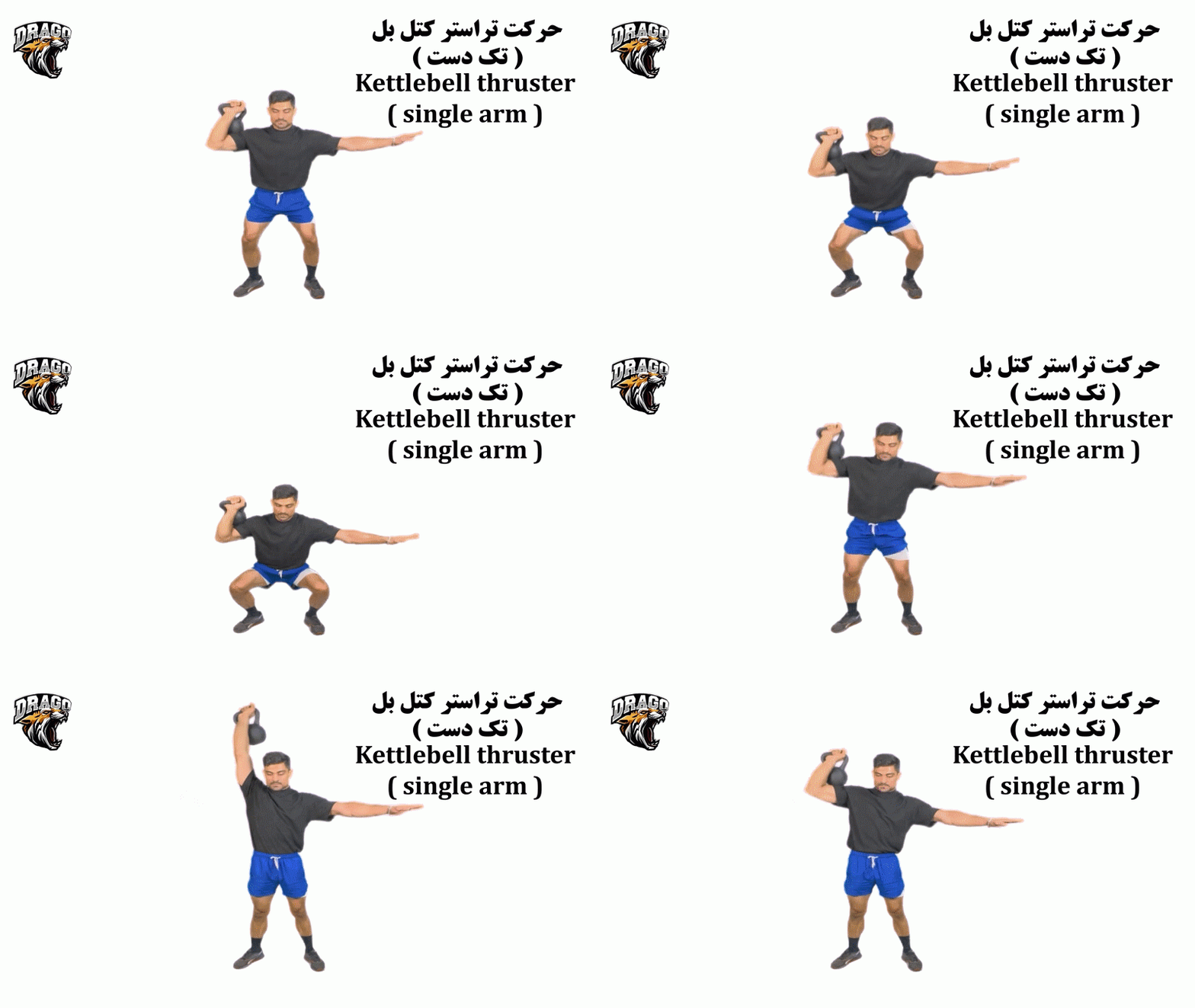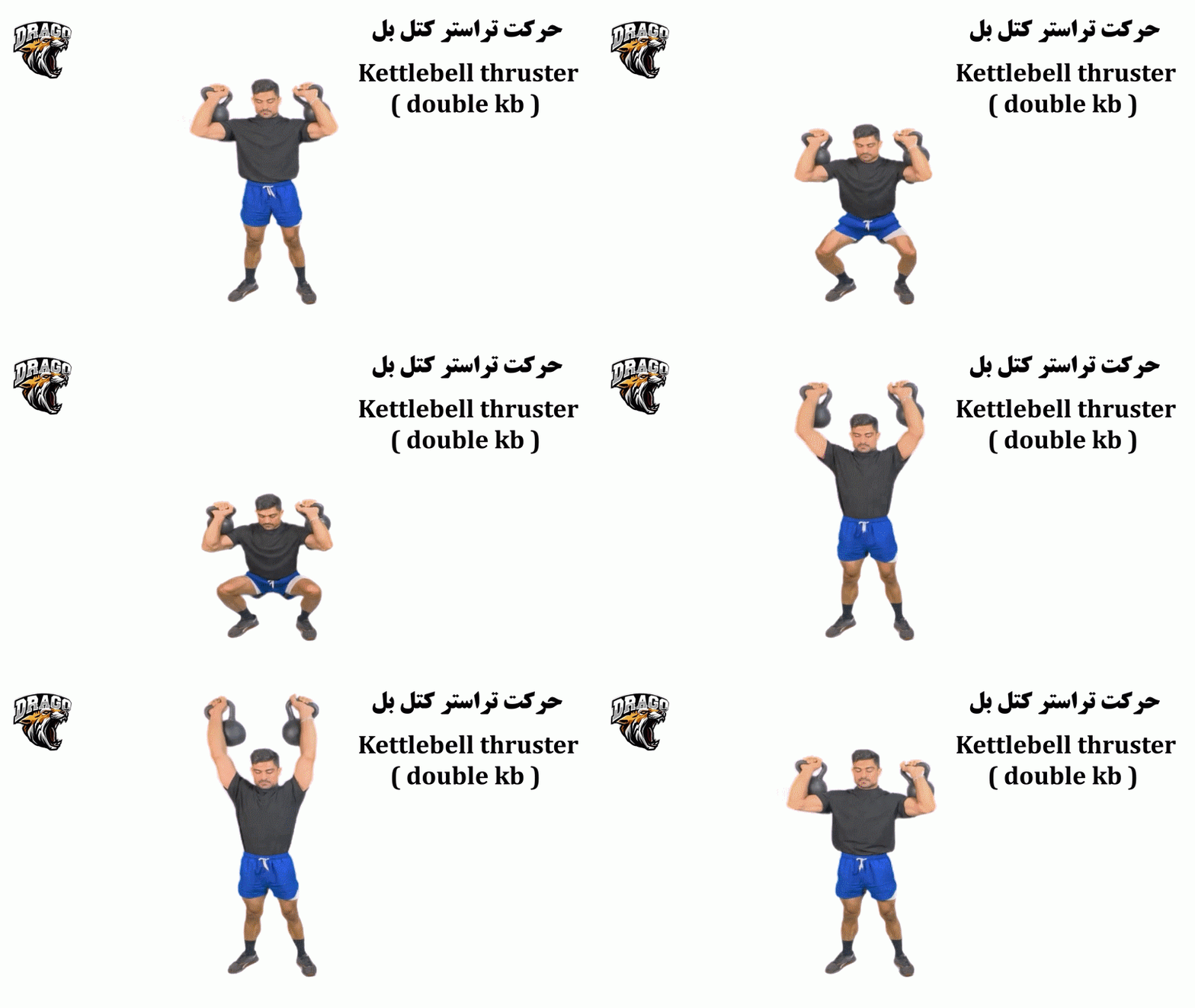

In the world of strength and functional training, exercises that engage multiple muscle groups simultaneously hold a special place. The Single-Arm Dumbbell Push Press is one such compound movement that relies on lower-body power, muscular explosiveness, and core stability for successful execution. This movement not only activates the shoulders and arms, but also plays a critical role in power transfer from the lower to the upper body—an essential aspect for professional athletes, especially in CrossFit.
In this article, we’ll explore the Single-Arm Dumbbell Push Press in full—from muscle anatomy and biomechanics to proper execution, common mistakes, corrective cues, and programming strategies.
CrossFit movement tutorials at Drago Gym CrossFit Club
Suggested reading: Dumbbell Push Jerk
The Single-Arm Dumbbell Push Press and Its Difference from Other Presses
The Push Press is an overhead pressing movement that, unlike the strict press or shoulder press, utilizes leg drive and explosive hip extension for assistance. The single-arm dumbbell version has the added benefit of forcing the body to work unilaterally, enhancing core engagement and improving motor control at a higher level.
Muscles Involved in the Single-Arm Dumbbell Push Press
Primary Muscles:
Anterior Deltoid – Responsible for raising the dumbbell overhead
Triceps Brachii – Assists in the final lockout phase
Quadriceps – Provide initial drive via knee flexion
Supporting and Stabilizing Muscles:
Gluteus Maximus – Assists in explosive leg drive
Core Muscles – Control torso rotation and prevent drift
Obliques – Stabilize against lateral movement
Specific Benefits of the Single-Arm Push Press
Enhanced Athletic Performance: Transfers force from the ground up, similar to movement patterns in running, throwing, and wrestling.
Unilateral Strength: Corrects muscular imbalances and improves bilateral power symmetry.
Increased Energy Expenditure: Combines a squat and press, raising heart rate and calorie burn.
Injury Prevention: Stronger core activation supports the spine more effectively.
Neuromuscular Coordination: The need to sync legs, trunk, and arm engages and trains the nervous system.
Step-by-Step Guide to Proper Execution of the Single-Arm Dumbbell Push Press
Step 1: Starting Position
Hold a dumbbell in your dominant or non-dominant hand and rack it in the front rack position at shoulder height.
Elbow should be slightly forward and below the dumbbell.
Feet shoulder-width apart, spine neutral, core braced.
Step 2: The Dip
Slightly bend the knees (~10–15 degrees) in a quick, shallow dip like a partial squat.
Keep the back flat, and avoid knees drifting past the toes.
Step 3: Drive and Explode
Drive upward forcefully through the heels.
Transfer the generated energy upward.
Simultaneously press the dumbbell overhead powerfully.
Step 4: Lockout and Stabilize
At the top, elbow fully extended, dumbbell directly overhead, wrist aligned with the shoulder.
Engage core and glutes, eyes forward.
Step 5: Controlled Descent
Slowly lower the dumbbell back to the starting position.
Note: Switch arms after a designated number of reps.
Common Mistakes in Execution
| Common Mistake | Description | Correction |
|---|---|---|
| Not using leg drive | Turns into a strict shoulder press | Focus on force generation from the knees |
| Excessive lower back arch | Risk of lumbar spine injury | Maintain constant core engagement |
| Pressing the dumbbell off the vertical path | Lack of balance during lift | Press directly above the shoulder |
| Poor coordination between legs and arm | Loss of power transfer | Practice with lighter weights to improve coordination |
Key Tips for Improved Performance
Proper breathing: Inhale during the dip, exhale explosively during the drive.
Use a mirror or coach: For form correction and avoiding bad motor habits.
Choose appropriate dumbbell weight: Excessive load reduces technical quality.
Gradual overload: Follow the principle of progressive loading.
Who Should Perform This Exercise?
- CrossFit athletes
- Athletes in throwing sports (e.g., basketball, volleyball, handball)
- Functional training enthusiasts
- Bodybuilders in strength/endurance phases
- Individuals seeking to improve core stability and trunk control
- Those with chronic shoulder pain or lumbar instability should consult a physiotherapist or qualified coach before performing this movement.
Conclusion
The Single-Arm Dumbbell Push Press is one of the most complete strength-functional exercises, transitioning you from isolated to integrated training. When executed correctly, this movement can enhance your movement efficiency, muscle control, balance, explosive power, and neuromuscular coordination. If you’re looking for a practical exercise to boost your physical performance, this should be one of your top choices.
Keep reading